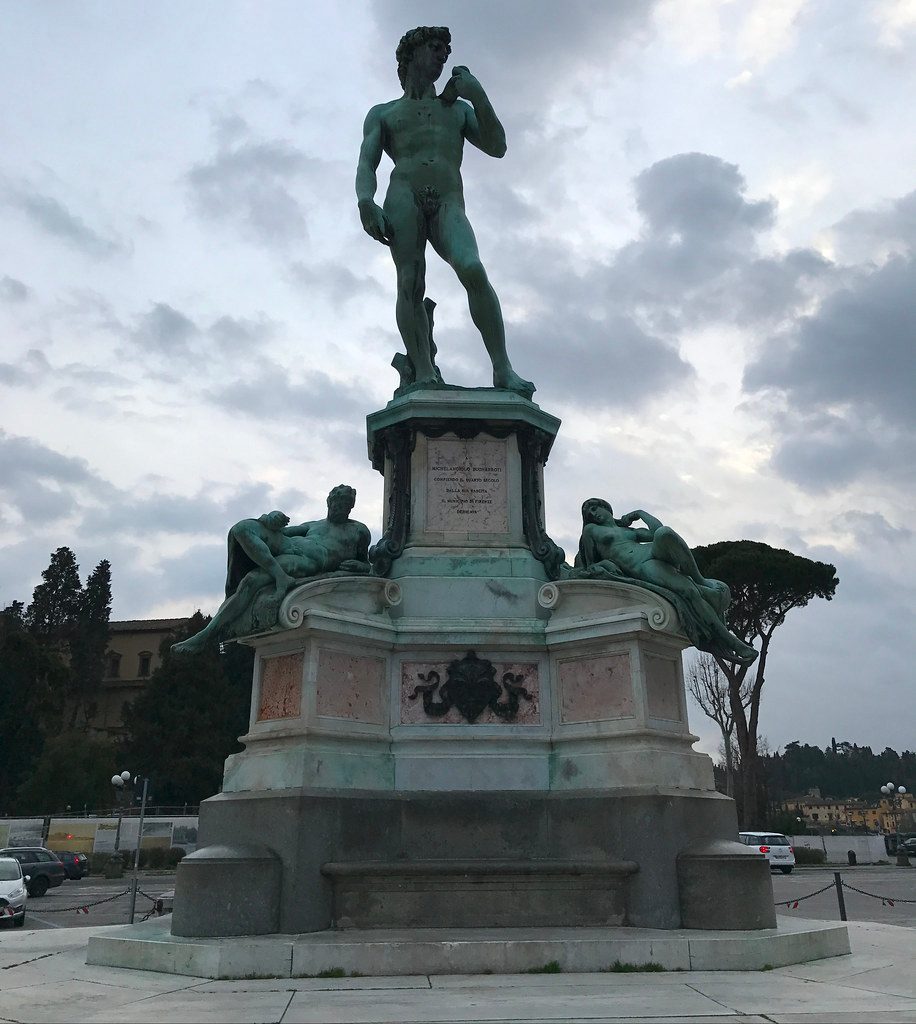
Bronze David Statue
06:00–08:00
The central bronze replica of David provides a classic composition with the city skyline in the background. Position the camera low to capture the statue against the Duomo.
Piazzale Michelangelo offers an unobstructed 180-degree sweep of Florence from an elevated terrace—Brunelleschi's dome, the Arno, and the hills beyond Fiesole in one frame. This page covers the terrace layout, optimal light windows, and the logistics that matter when you're working against a sunrise or client schedule.
Quick answer
Piazzale Michelangelo is open around the clock with free entry to the public square and panoramic terrace. The best arrival window for photography is 06:00–08:00, when foot traffic is lightest and early sun rakes across the terrace without the contrast spikes of midday. The square sits 100 meters above the Arno, accessible by foot, bus, or taxi, with no gate or ticket required.
The terrace was carved into the hillside in 1869 as a scenic overlook for the city's urban expansion—architect Giuseppe Poggi designed the square as the visual terminus of a tree-lined boulevard that climbs from Porta San Niccolò. What makes it enduring for photographers is geometry: the terrace faces northwest, which means the Duomo is front-lit during morning and side-lit through the afternoon, while the Arno catches reflections without the silhouette problem you get shooting from Ponte Vecchio at ground level. Piazzale Michelangelo anchors many Florence photoshoot locations because it solves the elevation problem. The city center is flat, and most street-level vantage points trap you between buildings or frame only a slice of the skyline. From the terrace, you work with depth—foreground balustrade, middle-ground rooftops, background hills—and the unobstructed sightline to the cathedral dome delivers the postcard compression that clients expect. The bronze David replica at the square's center can serve as a compositional anchor or a framing device, depending on your lens and subject placement. The light cycle dictates your shoot window more than crowds do. Early morning, between six and eight, offers cool-toned diffusion and minimal foot traffic; by nine, tour groups and runners fill the terrace, and by eleven the sun is overhead, flattening contrast and bleaching the tile roofs. Late afternoon brings warmer color temperature, but the Duomo will be backlit, and the terrace itself falls into shadow by six in winter, seven in summer. If you're scheduling portrait work, the golden hour here is short but clean—no streetlights, no competing signage, just stone and sky. The terrace layout is straightforward: a semi-circular belvedere with a low wall, a central piazza around the David replica, and a stepped observation area on the southern edge. The wall is waist-high, which works for environmental portraits but not for product or tabletop setups. The stone surface is uneven—bring a sandbag if you're using a tripod. The square has no permit requirement for handheld personal or commercial shoots, but drone use above the terrace is restricted under Florence's city-center flight rules. If you're working with reflectors or off-camera lighting, early morning minimizes the chance of interference from other visitors. Accessibility matters if you're hauling gear. The terrace sits at the top of a steep grade—if you're walking from the river, expect a twenty-minute climb on Viale Michelangelo or the staircase from Piazzale Poggi. Bus line 12 and 13 stop at the square, but service before seven is limited. A taxi or rideshare can drop you directly at the terrace entrance, which saves the climb and preserves your shoot energy. The surface is paved and wheelchair-accessible, though the slope approaching the square is steep enough that motorized assistance is advisable for anyone with mobility constraints.
“The terrace faces northwest, which means the Duomo is front-lit during morning and side-lit through the afternoon, while the Arno catches reflections without the silhouette problem you get shooting from ground level.”
06:00–08:00
The central bronze replica of David provides a classic composition with the city skyline in the background. Position the camera low to capture the statue against the Duomo.
06:00–08:00
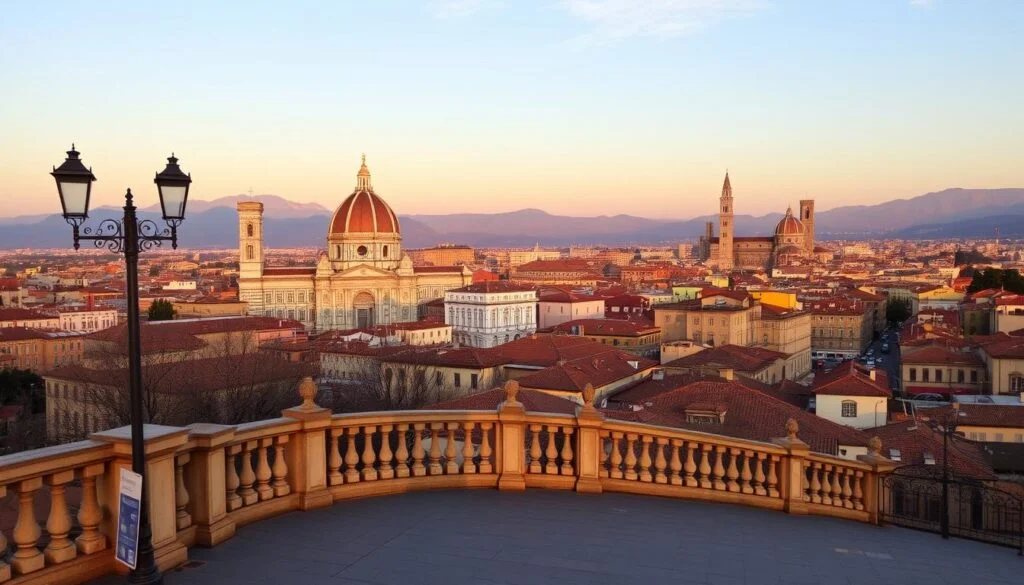
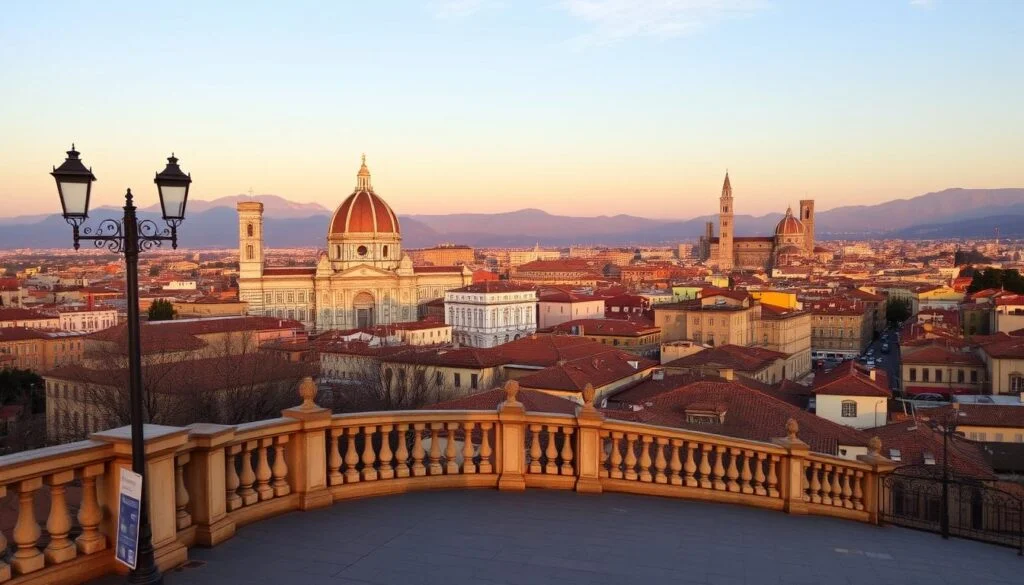
The stone railing offers an unobstructed view of the Arno River and the historic center. Frame your subject against the expanse of terracotta rooftops.
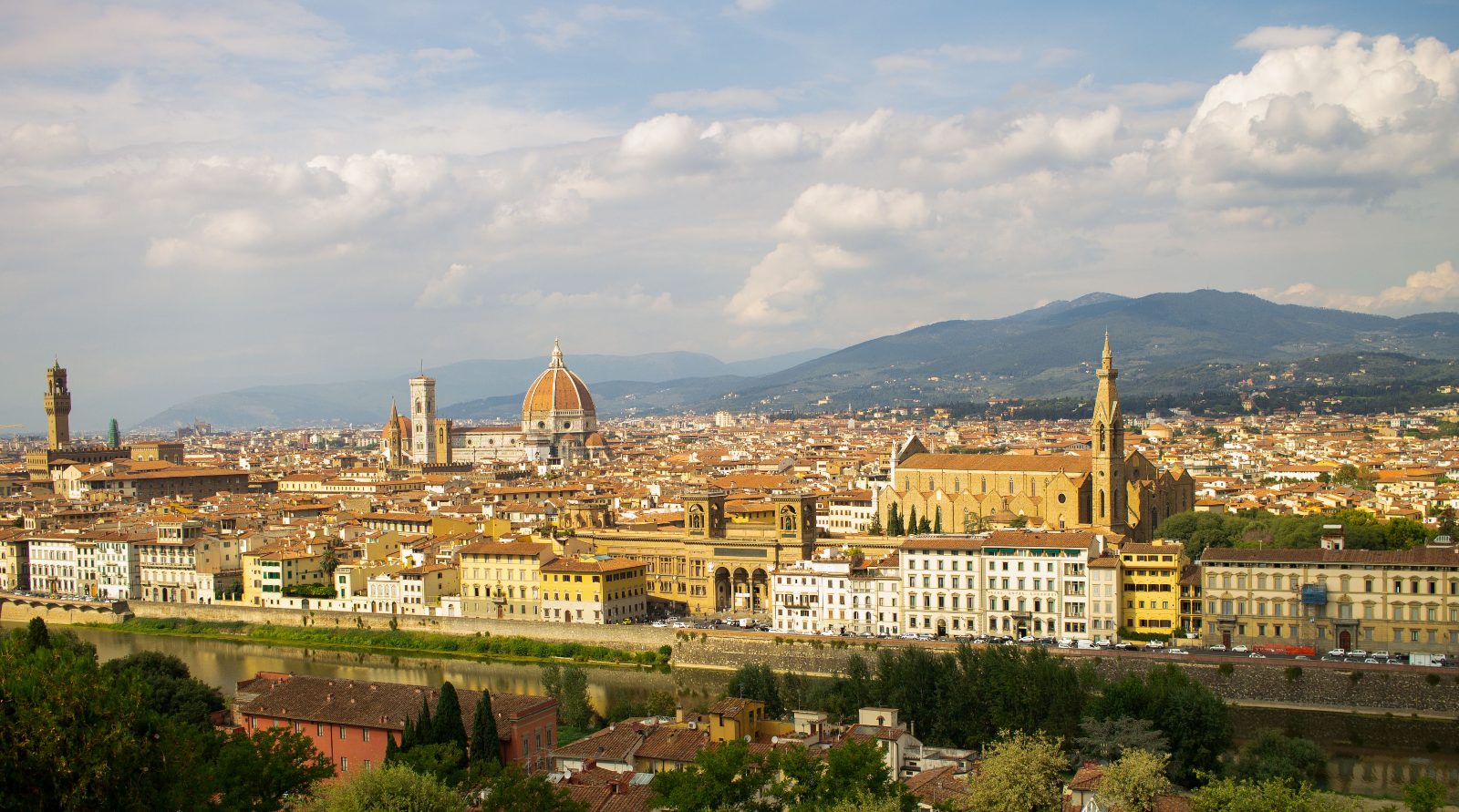
06:00–08:00
This spot captures the western light reflecting off the city buildings. Use this angle for wide shots of the river winding through Florence.
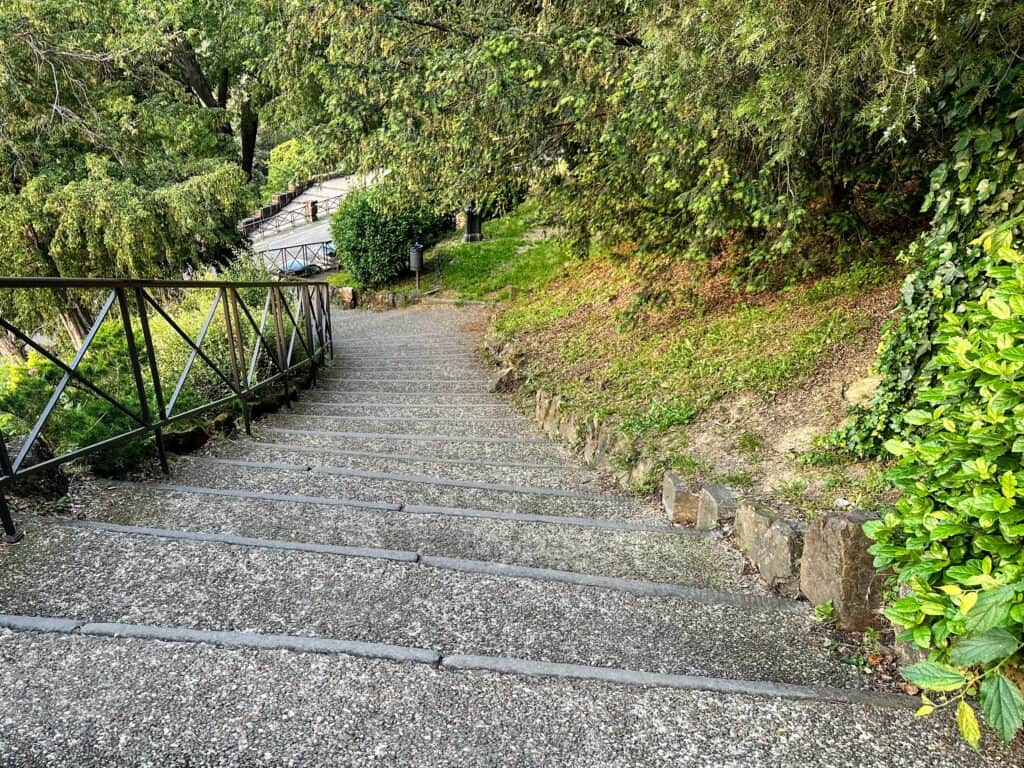
06:00–08:00
The wide stairs leading up to the terrace allow for dynamic perspective shots. Include the stairs in the foreground to create depth leading toward the city vistas.
Piazzale Michelangelo is located in the Oltrarno district of Florence, perched on a hill south of the Arno River. Access is straightforward via public transport, taxi, or a scenic walk from the city center.
Line 12 or 13 from Santa Maria Novella Station
From Ponte alle Grazie via Via dei Bastioni
From Florence city center to Piazzale Michelangelo
Viale Michelangelo (limited parking available)
For the best photography conditions, follow the best arrival window of 06:00–08:00 to avoid midday crowds. Taxis provide the most direct route if you are carrying equipment.
Piazzale Michelangelo remains accessible to the public at all hours, allowing for flexible photoshoot scheduling throughout the week.
Everything you need to know about florence photoshoot locations
Professional photographers are generally permitted to use handheld equipment in this public space. As it is a public square, you should remain mindful of other visitors and ensure your setup does not obstruct thoroughfares. Large lighting rigs or tripods that block pathways may attract attention from local authorities. Always prioritize the comfort of pedestrians while working at these high-profile city locations.